★★★★★Google 5.0 · ★★★★★Trustpilot 5.0Super friendly and professional from the very first contact. I have a 4-wavelength diode laser from SIACSKIN and my clients and I are so happy with the results.Nadja Furth · Trustpilot · (translated from German)
Manufacturer from Düsseldorf
2-year manufacturer’s warranty
CE-MDR
Reply within 24 h
✓
Thank you!
Your request has been received. We will get back to you within 24 h via WhatsApp and email.
Side effects of laser treatments: what is normal and when to act
Every laser and light treatment triggers a reaction in the skin, because that is exactly how it works. Redness, mild swelling or fine crusts are therefore usually a normal part of the treatment. Blisters, pigment changes or burns occur less often, almost always due to unsuitable settings, tanned skin or missing aftercare.
This page explains which side effects are typical for laser hair removal, pigment treatment, CO2 laser, BBL and RF microneedling, how long they last and when a doctor should take a look. It also shows how cooling, skin analysis and a test patch reduce the risk. Who should not be treated at all is covered on the contraindications page.
Which side effects are normal after a laser treatment?
After a laser treatment, redness, a feeling of warmth and mild swelling are normal and last from hours to a few days depending on the procedure. With hair removal, small bumps often appear around the hair follicles; with pigment spots, the area darkens briefly and forms a fine crust. After ablative lasers such as the CO2 laser, the skin peels for a few days. These reactions show that the energy has arrived where it is meant to act.
Strong pain, large blisters, weeping wounds or redness that does not subside after a week are unusual. SIACSKIN devices such as the DEWEON 4LD and the FRACO CO2 XL are designed for controlled treatment so that the normal reaction stays as mild as possible.
How long do redness and swelling last after lasering?
Redness and swelling after lasering last from a few hours to about two weeks depending on the procedure. After laser hair removal, BBL or carbon peeling they are usually gone after a few hours to two days. After RF microneedling, expect 1 to 3 days, after a non-ablative fractional laser 2 to 5 days. It lasts longest after a classic CO2 laser, where pink skin often remains visible for several weeks.
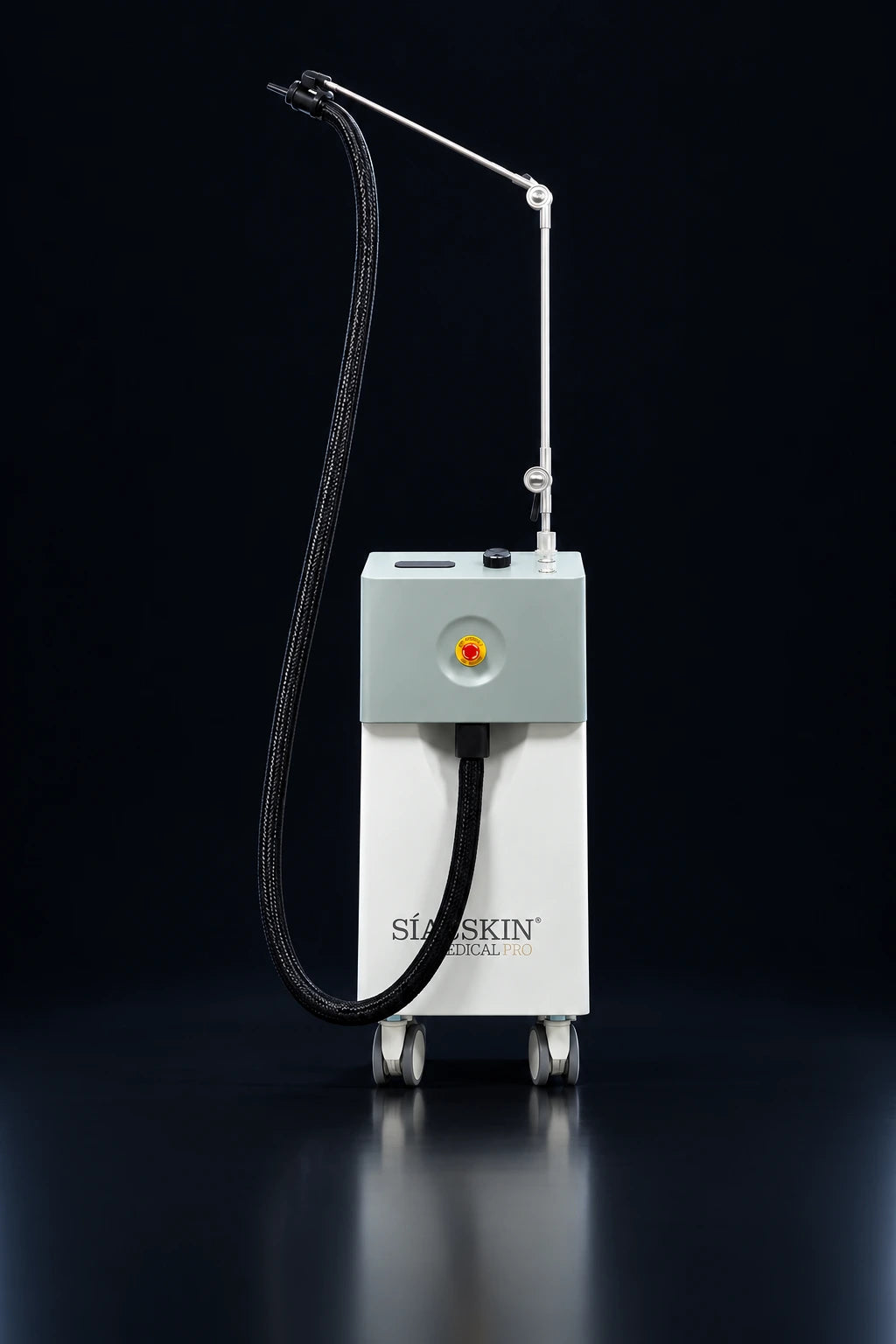
Cooling directly after the treatment noticeably shortens the phase. The KYROMASTER cools the skin with cold air during and after the treatment and can be combined with SIACSKIN lasers, BBL and RF microneedling.
Yes, in rare cases laser hair removal can trigger denser hair growth in adjacent areas; this is called paradoxical hypertrichosis. It mainly affects the face, neck and shoulders, more often with darker skin and hormonally driven hair growth. It is assumed that too little energy stimulates dormant hair follicles rather than destroying them. This is why a sufficiently effective setting matters more than a particularly gentle one.
If the phenomenon occurs, the zone is treated consistently with suitable energy. The DEWEON 4LD combines four wavelengths, and the AI skin analysis detects skin and hair type and sets the parameters automatically.
How long does it take for dark or light spots to fade after lasering?
Dark spots after lasering usually fade within 3 to 6 months; light spots often take longer and in rare cases do not fully recover. Dark spots are an inflammatory reaction of the skin and recede once the inflammation subsides. Light spots occur when pigment-forming cells have been disturbed and need time before they produce pigment again. During this phase the area should not be treated again and should be protected consistently from the sun.
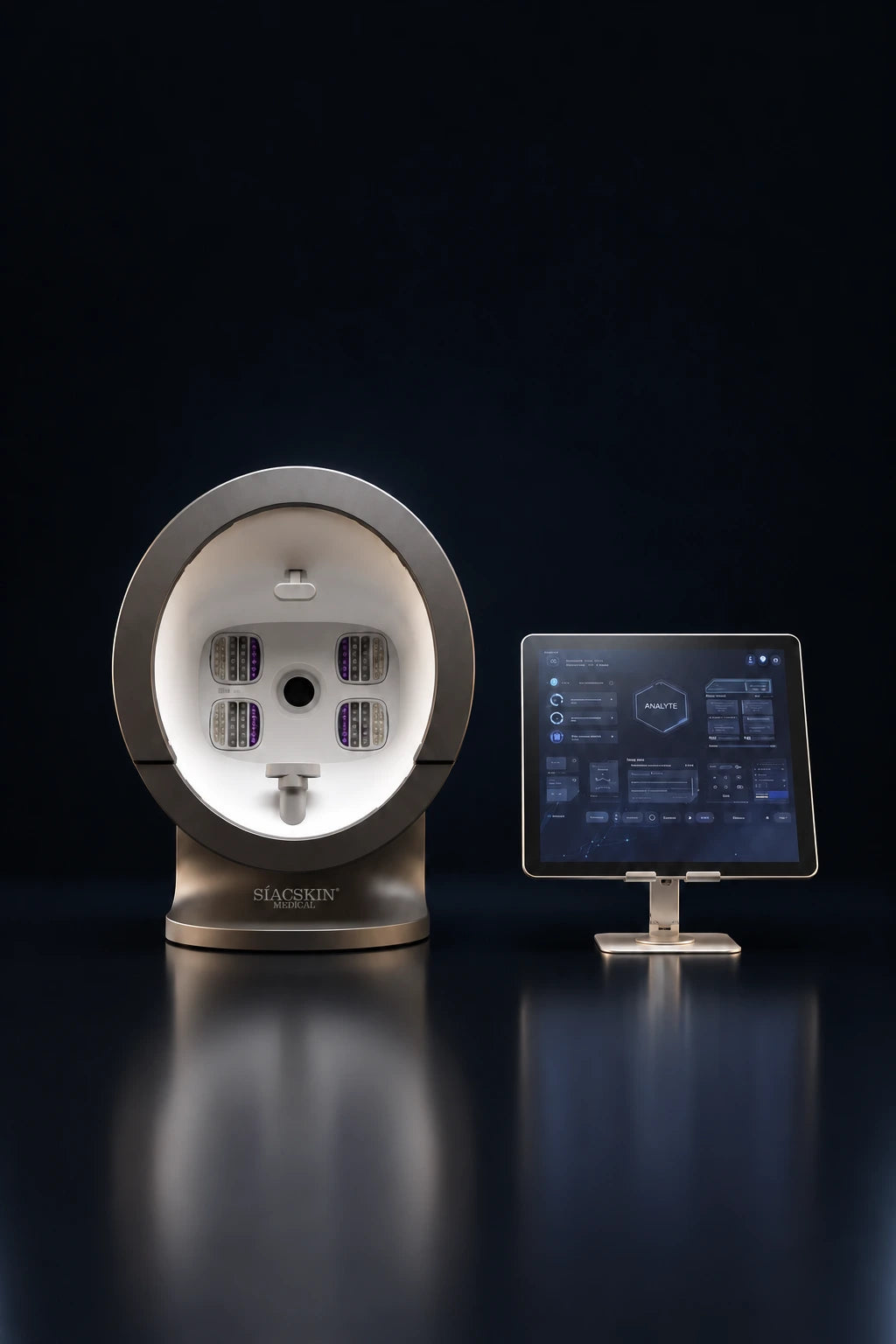
The Skin Analyzer Pro documents the skin condition with white light, UV and polarisation. This allows the course of the spots to be compared objectively over the weeks.
A burn after lasering is recognised by strong, persistent burning, sharply defined blisters, greyish-white or weeping skin and redness in the shape of the handpiece. Normal reactions, by contrast, are evenly red, warm and subside after hours. Causes are usually too much energy, tanned skin, missing cooling or too many pulses on the same spot. If a burn is suspected, the area should be examined by a doctor.
Good cooling lowers the risk considerably. The DEWEON 4LD has a cooled sapphire lying directly on the skin, and the AlexDUAL UFO works with compressor and quadruple cooling.
Which side effects can a melasma or pigment treatment with the laser have?
A melasma or pigment treatment with the laser can cause darkening, crusts, temporary redness and above all an intensification of the spots through too much heat. Melasma reacts sensitively to heat and inflammation, which is why gentle settings, longer intervals and strict sun protection are decisive. Individual age spots, on the other hand, usually heal uncomplicatedly with a fine crust after 7 to 14 days. Relapses of melasma are common if sun or hormones continue to act.
For melasma, SIACSKIN offers the non-ablative TULIX with 1927 nm, whose scan density is adjustable. The PICOLO XL is designed for individual pigment spots.
What side effects does the fractional CO2 laser have?
Typical after the fractional CO2 laser are redness, swelling, a burning sensation like sunburn and fine crusts that come off in the first days. The pink skin can then remain for a few more weeks. Less common are herpes outbreaks, acne flare-ups, dark spots on darker skin types or infections if aftercare is not right. Scars are rare and usually result from too high a density or energy, infections or improper aftercare.
For the FRACO CO2 XL, SIACSKIN states 10 to 14 days of downtime with the classic setting and 3 to 4 days in CoolPeel mode. Anyone who wants hardly any downtime is better served by the non-ablative TULIX.
After RF microneedling, redness, mild swelling, a fine dot pattern and sometimes small bruises are normal and usually subside after 1 to 3 days. Less often there are tiny crusts, temporary blemishes or, on darker skin types, dark spots. Infections are rare if work is sterile and the skin is kept clean afterwards. With deep treatments on the body, swelling lasts somewhat longer.
With the EUPHEUS the needles are insulated, so the radiofrequency acts mainly in the depth and less at the skin surface. The Cold Hammer soothes the skin directly after the treatment.
After a BBL treatment, redness and a feeling of warmth for a few hours are normal; pigment spots darken and flake off within 7 to 10 days. With vascular treatments, mild swelling can occur. Less common are blisters, crusts or pigment changes, especially on tanned skin or with too high energy. Because BroadBand Light is absorbed by the pigment of the epidermis, the treatment is intended for lighter skin types.
The DERMAFORCE BBL PRO is designed for skin types I to IV. The sapphire contact cooling cools the skin at the light exit, and the SIA-KI sets skin type, body region and energy automatically.
Is it allowed to laser the neck if you have a thyroid condition?
Yes, as a rule a thyroid condition does not speak against laser hair removal on the neck. According to current knowledge there is no evidence that laser light harms the thyroid, because it penetrates only a few millimetres into the skin and is not ionising radiation like X-rays. The condition and the medication nevertheless belong in the initial consultation, because some preparations make the skin more sensitive to light. After surgery on the neck, the scar should have healed completely; in case of doubt the treating doctor clarifies this.
The DEWEON 4LD stores client data and zone documentation in the client management so that you can follow the course per zone.
After a treatment with the alexandrite laser, redness and small swellings around the hair follicles are normal and usually subside after hours to two days. Because 755 nm is strongly absorbed by melanin, the risk of blisters and pigment changes rises on tanned or dark skin. That is why darker skin is treated with the Nd:YAG laser at 1064 nm. Crusts or temporary light sensitivity of the skin occur rarely.
The AlexDUAL UFO combines 755 nm and 1064 nm in one device. The SIA-KI selects skin type, body region and energy automatically, and cooling is provided by compressor and quadruple cooling.
What is the difference between a side effect and a contraindication in lasering?
A side effect is a reaction of the skin to the treatment, a contraindication is a reason not to treat at all or to treat later. Redness, swelling or crusts are side effects that are to be expected depending on the procedure. Contraindications are, for example, photosensitising medication, fresh tan, active herpes in the treatment area or conspicuous moles. Anyone who overlooks contraindications considerably increases the risk of serious side effects.
That is why a medical history form belongs before every first session. With SIACSKIN devices such as the DEWEON 4LD, client data and zones are documented in the client management, and the on-site training by SIACSKIN experts accompanies you at the start.
When should you see a doctor after a laser treatment?
You should see a doctor after a laser treatment if there is strong pain, large or increasing blisters, weeping or purulent areas, fever or spreading redness. Redness that does not subside after a week, or small blisters in the lip area that suggest herpes, should also be examined by a doctor. The same applies to changes in the eye or visual disturbances after a treatment on the face. In case of doubt, it is better to clarify early than to wait.
Studios should have a fixed procedure for such cases and actively follow up with the client. The FRACO CO2 XL includes on-site training by SIACSKIN experts, and the aftercare guide explains aftercare.
What side effects can a picosecond laser treatment have?
After a picosecond laser treatment, redness, mild swelling and, with tattoos, a briefly lasting whitish discolouration are normal. In the following days fine pinpoint bleeds, small blisters or crusts can occur, which usually heal within 1 to 2 weeks. Less often there are temporarily darker or lighter skin areas, especially on darker skin types or with sun shortly after the treatment. Because the pulses are very short, the surrounding tissue is heated comparatively little.
The PICOLO XL works with 280 ps and four wavelengths. This lets you choose the wavelength to suit colour and skin type.
When may the next laser session take place after a skin reaction?
The next laser session should only take place once redness, crusts, blisters and dark spots from the last treatment have healed completely. With a normal reaction the usual interval of the procedure applies, i.e. about 4 to 8 weeks for hair removal and tattoo. After blisters or pigment changes you wait longer and then continue with more cautious settings and better cooling. A new tan postpones the appointment further.
Document the reaction and settings of every session. With SIACSKIN lasers such as the AlexDUAL UFO and the DEWEON 4LD, the client management stores client data and zone documentation so that you can adjust specifically at the next appointment.