★★★★★Google 5.0 · ★★★★★Trustpilot 5.0Super friendly and professional from the very first contact. I have a 4-wavelength diode laser from SIACSKIN and my clients and I are so happy with the results.Nadja Furth · Trustpilot · (translated from German)
Manufacturer from Düsseldorf
2-year manufacturer’s warranty
CE-MDR
Reply within 24 h
✓
Thank you!
Your request has been received. We will get back to you within 24 h via WhatsApp and email.
Q-switched laser: effect, treatments and use in the studio
The Q-switched laser is the workhorse for pigment in the skin: it releases its energy in a few nanoseconds and breaks tattoo ink, permanent make-up and pigment spots into fine particles that the body clears away. With 1064 and 532 nm, a Q-switched Nd:YAG laser covers dark and light colours and is also the basis for carbon peeling.
This page explains which treatments are possible with a Q-switched laser, how a session works, how many appointments are typical and where the technology reaches its limits. It also shows what the Q-switched lasers PICOLO L and PICOLO S from SIACSKIN are designed for.
Which treatments can you offer with a Q-switched laser?
With a Q-switched laser you can remove or lighten tattoos, correct permanent make-up, treat pigment spots such as age spots and sun spots, and perform carbon peels. This is possible because the laser releases its energy in nanoseconds and targets colour particles precisely without strongly heating the surrounding tissue. Additional modes add pore refinement, glow treatments and, depending on the attachment, redness.
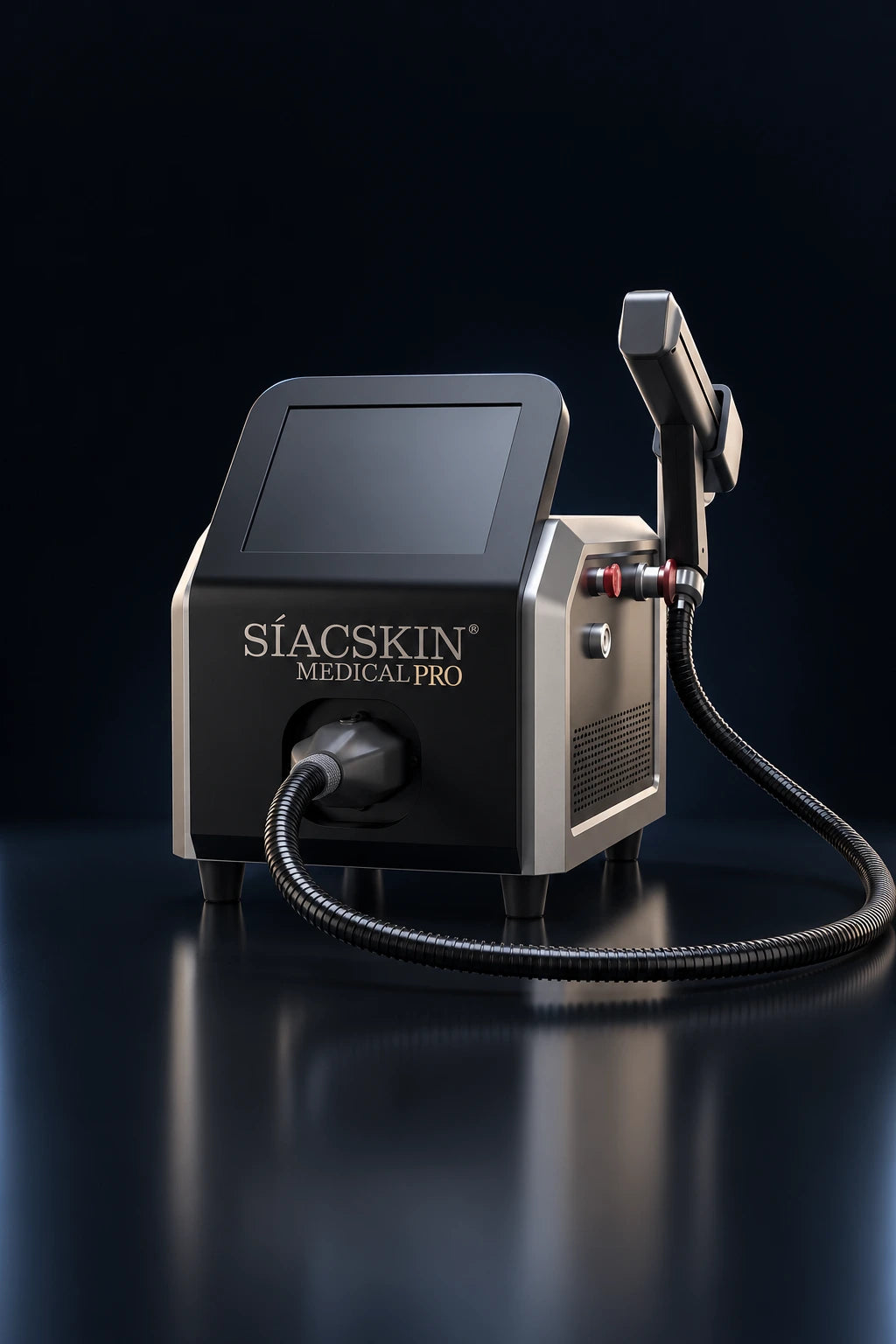
With 1064 and 532 nm, five attachments and six modes, the PICOLO L covers tattoo, pigment, skin texture and carbon peeling. The PICOLO S is the compact entry-level device for permanent make-up, carbon peeling, pigment and small tattoos.
How does a Q-switched Nd:YAG laser act on pigment in the skin?
A Q-switched Nd:YAG laser heats pigment so quickly that the resulting pressure breaks the particles into smaller fragments. The decisive factor is the extremely short pulse duration in the nanosecond range: the energy acts on the pigment before the heat can spread into the surrounding tissue. The fragmented particles are then carried away by the lymphatic system over several weeks, which is why a tattoo or spot fades gradually rather than immediately.
The PICOLO L works with a pulse duration of 3 nanoseconds and high peak power. This lets it break down even dark and deep-seated colour particles while the surrounding skin absorbs as little heat as possible.
What is 1064 nm used for with a Q-switched laser, and what is 532 nm used for?
1064 nm is used for dark colours and deep pigment, 532 nm for red, orange, light shades and superficial pigment spots. 1064 nm is the fundamental wavelength of the Nd:YAG laser, penetrates deeply and is absorbed little by skin pigment. That is why it is also the gentler choice for darker skin types and the wavelength for carbon peeling. 532 nm is created by frequency doubling and acts more superficially.
On the PICOLO L you switch between both wavelengths using the 1064/532 nm zoom handpiece. For the PICOLO S, 755 and 1320 nm are also specified, so even the entry-level device covers different colour shades and carbon peeling.
What does a treatment with the Q-switched laser involve?
A Q-switch treatment begins with a consultation, photo documentation and a test patch, after which the area is treated pulse by pulse. Beforehand you clarify skin type, tan, medication and the goal; client and practitioner wear suitable laser safety goggles. With tattoos, a whitish discolouration appears right after the pulse and disappears within minutes. Small areas are done in a few minutes, a carbon peel on the face takes about 20 to 30 minutes. At the end the skin is cooled and sun protection is applied.
The PICOLO L and PICOLO S store client data and zone documentation in the integrated client management, so the procedure remains reproducible in the studio. Training is included with every SIACSKIN purchase.
How many sessions are typical with a Q-switched laser, depending on the treatment?
For tattoos, a Q-switched laser usually needs 6 to 10 sessions or more, for pigment spots usually 1 to 3 and for carbon peeling 3 to 6 sessions. How many it takes in an individual case depends on colour, amount of ink, depth, body area and skin type. Black, older and thinly tattooed motifs fade fastest, colourful and professionally dense motifs take longer. Permanent make-up is usually at the lower end.
With the PICOLO L and PICOLO S, it is best to plan with realistic ranges and progress photos. For very colourful or stubborn tattoos, the picosecond laser PICOLO XL is the complement that can save sessions.
How much time is needed between pigment and carbon peeling sessions with a Q-switched laser?
Between two Q-switch sessions for pigment spots there are usually about 4 weeks, for carbon peeling 2 to 4 weeks. With pigment the body needs time to clear the fragmented particles, and the fine crust must have healed completely. Carbon peeling stresses the skin less, so shorter intervals are possible; the effect on pores and glow builds up over the series. Treating again too early does not speed up the result but only irritates the skin.
With the PICOLO L and PICOLO S you document every session including zones in the client management. This lets you plan series cleanly and see when a zone can tolerate the next appointment.
A Q-switch treatment usually feels like short, hot splashes or the snap of a rubber band and is manageable for most people. Tattoo removal is felt most over bone and on thin skin, whereas many describe a carbon peel as warm and tingling. Cooling before, during and after the treatment takes the edge off the pulse. For large tattoos, a numbing cream can make sense after consultation.
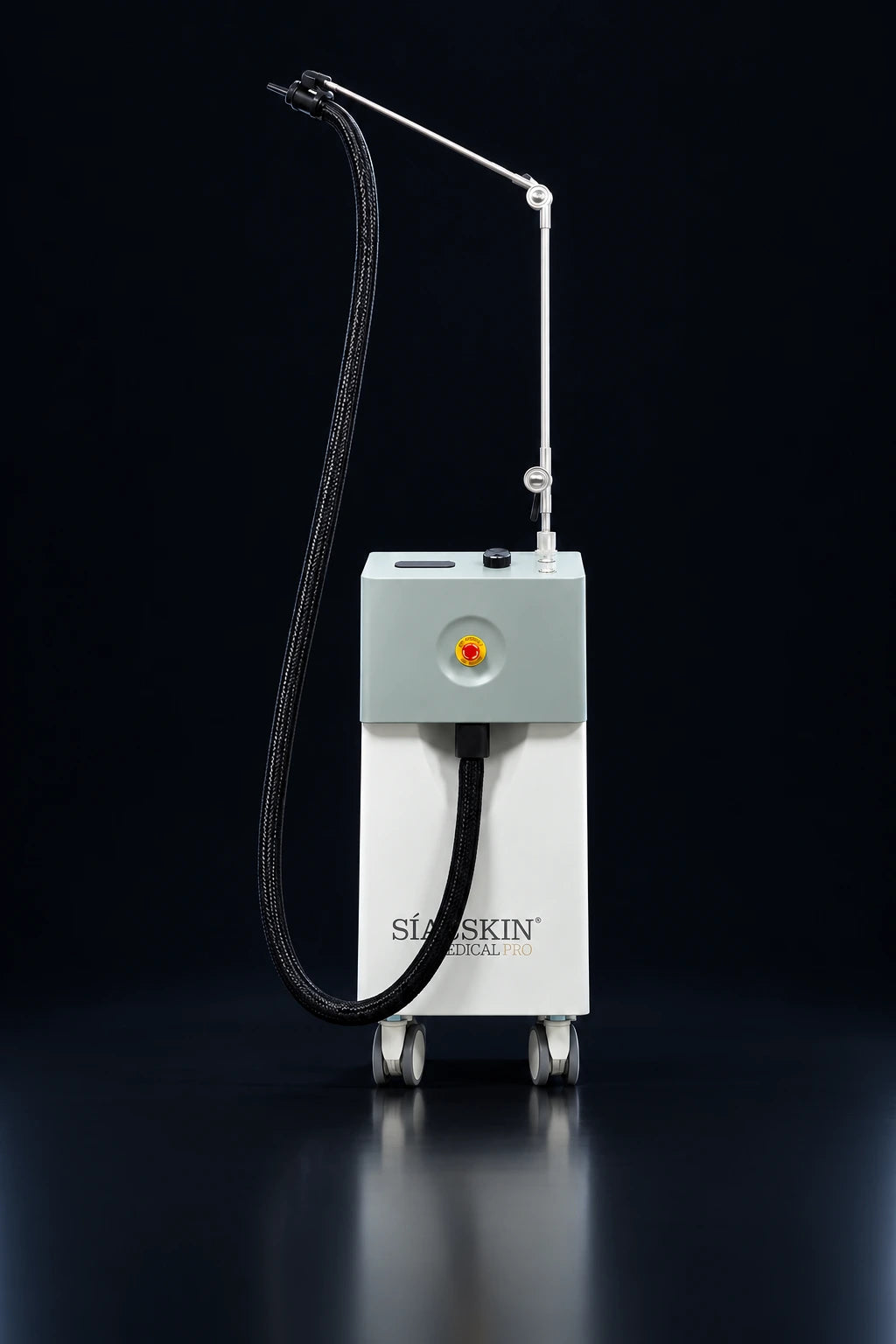
The KYROMASTER can be added to the PICOLO L and PICOLO S. It cools the skin with cold air directly in the treatment field without interrupting the workflow at the laser.
Yes, with a suitable attachment a Q-switched laser can also treat redness such as facial flushing. This requires a wavelength absorbed by the blood pigment; with the standard wavelengths 1064 and 532 nm alone this is only possible to a limited extent. Pronounced couperose, rosacea or spider veins, on the other hand, are better suited to light or vascular treatments. Before any treatment it should be clarified where the redness comes from, and in case of doubt a dermatologist should be consulted first.
The PICOLO L includes a 585 nm attachment intended for redness and blue tattoo colours. For diffuse redness and couperose, the DERMAFORCE BBL PRO with its vascular filters is the suitable complement.
Is the Q-switched laser also suitable for darker skin types?
Yes, with 1064 nm the Q-switched laser is also suitable for darker skin types if the energy is chosen carefully. This wavelength is absorbed less by the melanin of the epidermis than shorter wavelengths, which lowers the risk of pigment changes. 532 nm, on the other hand, can only be used very cautiously on dark skin. A test patch and somewhat longer intervals between sessions are mandatory for skin types IV to VI.
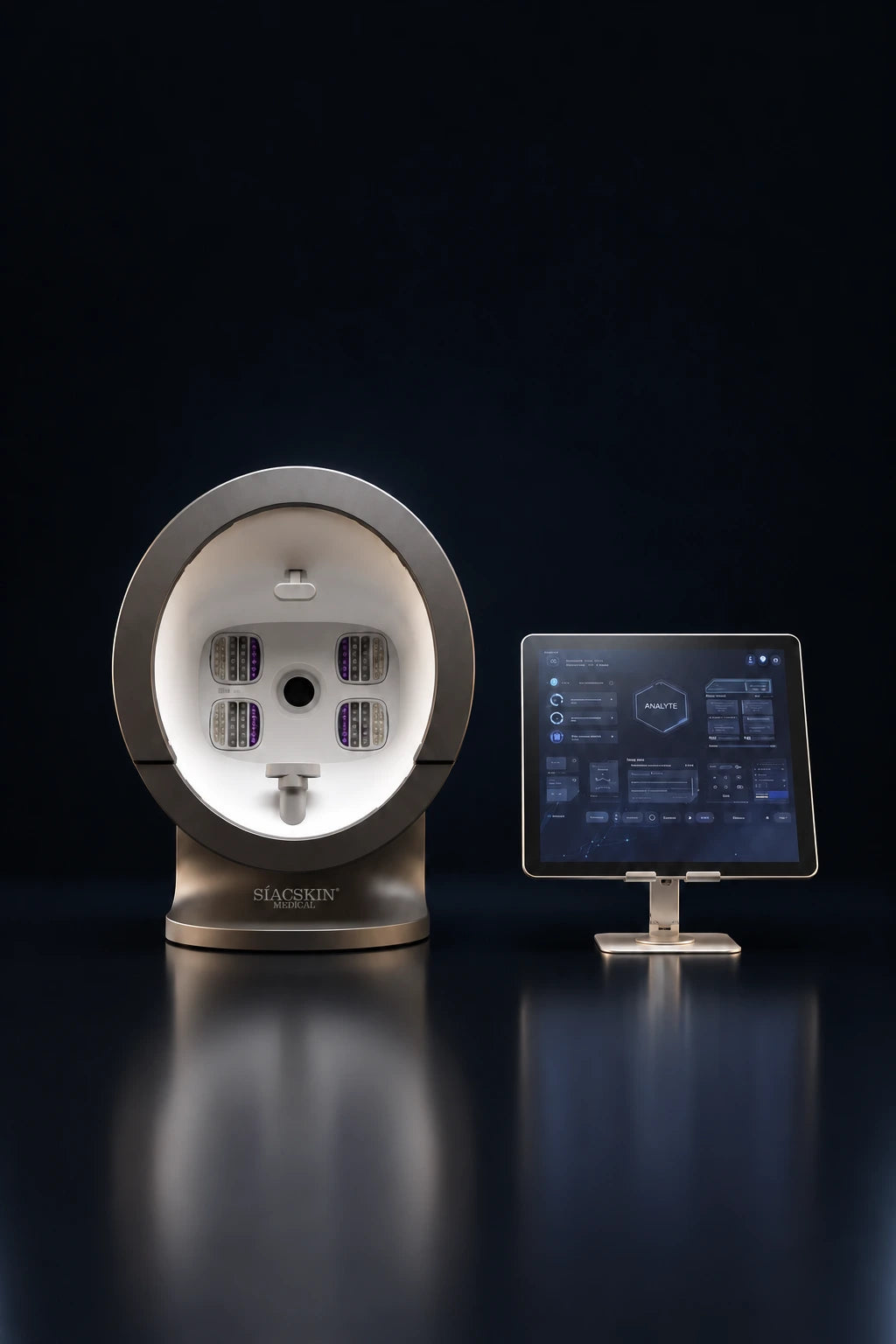
The PICOLO L and PICOLO S both work with 1064 nm as the fundamental wavelength. To assess the skin type before the first session, the Skin Analyzer Pro helps with its multispectral skin analysis.
Which skin reactions are normal after a Q-switch treatment?
After a Q-switch treatment, redness, mild swelling and, with tattoos, a briefly lasting whitish discolouration are normal. In the following days small pinpoint bleeds, blisters or fine crusts can occur, especially with densely tattooed areas. Pigment spots often darken first and then come off as a fine crust after 7 to 14 days. After a carbon peel the skin is usually red for only a few hours. Persistent pain or weeping wounds, however, should be examined by a doctor.
With the PICOLO L and PICOLO S you keep the reaction small through suitable settings. What to do in the days afterwards is explained in the aftercare guide.
What should you keep in mind after a Q-switched laser treatment?
After a Q-switched laser treatment you should cool the skin, keep it clean and protect it consistently from the sun. Do not pick at crusts and blisters but let them heal, and care for the area with a mild, moisturising product. Sauna, swimming pool and intense exercise should be paused for 2 to 7 days depending on the reaction, peelings and retinol for about a week. Sun protection with a high SPF remains mandatory for four weeks so that no new pigment spots develop.
After every session with the PICOLO L or PICOLO S, give your clients written care instructions. The SIACSKIN aftercare guide summarises the most important points.
Can a Q-switched laser remove age spots and sun spots?
Yes, age spots and sun spots are among the treatments to which a Q-switched laser responds very well. The pigment usually lies superficially and absorbs the energy well, often 1 to 3 sessions are enough. After the treatment the spot darkens briefly, forms a fine crust and comes off after 7 to 14 days. Beforehand it must be clarified that the spot is harmless; conspicuous spots should go to a dermatologist first.
With the PICOLO L you treat superficial pigment with 532 nm via the zoom handpiece. According to SIACSKIN, the PICOLO S is also designed for age spots and sun spots.
What does a fractional attachment bring to a Q-switched laser?
A fractional attachment splits the laser beam into many small points of light and thus extends the Q-switched laser with treatments for skin texture. Instead of hitting individual colour particles, it places fine pulses in a grid that stimulates the skin to renew itself. This is used for skin rejuvenation, deep cleansing, fine lines and a finer skin texture. The effect builds up over several sessions.
The PICOLO L includes a fractional attachment and a 755 nm honeycomb attachment. This way you use the same laser not only for tattoo and pigment but also for skin texture treatments and make better use of the device.
A Q-switched laser reaches its limits with very colourful, stubborn or previously treated tattoos and with melasma. Green, blue and turquoise often respond less to nanosecond pulses, and some tattoos hardly react any more after many sessions. Melasma can only be treated carefully with gentle settings, because too much heat can intensify the spots. Deep wrinkles and sagging skin are not tasks for the Q-switched laser.
For difficult colours, the picosecond laser PICOLO XL with 280 ps and four wavelengths is the suitable complement to the PICOLO L or PICOLO S. For melasma, SIACSKIN relies more on the non-ablative TULIX with 1927 nm.
Who benefits from a Q-switched laser in a studio or practice?
A Q-switched laser pays off for studios and practices that want to offer tattoo and PMU removal, pigment treatments and carbon peeling from a single source. These treatments are in regular demand, run in series and bring clients back several times. PMU studios, cosmetic institutes and tattoo studios in particular use the laser on several days a week. Anyone who mainly removes colourful and large tattoos should also consider a picosecond laser.
The PICOLO S is the compact entry-level device for PMU, carbon peeling and small tattoos; the PICOLO L is the platform with five attachments and six modes for a broader offering.